Securing a 500 square kilometer oil field in the most remote corners of the world is a task that defies traditional solutions. For decades, the industry standard was a combination of perimeter fencing and scheduled patrol vehicles. It was a visible, tangible approach, but it was fundamentally flawed. It assumed that a fence could stop a determined threat and that a patrol truck would be in the right place at the right time.
We learned the hard way that this was not enough.
I remember a night in the early days of our operations. A remote pipeline facility was suffering from recurring incidents. We had guards on site and traditional sensors placed at the gates. Yet, every morning, our teams would arrive to find equipment compromised or fuel siphoned. The perpetrators knew exactly when the guard rotation happened and where the patrol routes were weakest. They were navigating the vast, unmonitored gaps between our assets, moving like shadows under the cover of darkness. The reactive model was failing because we were only seeing the aftermath of an event, never the intent.
That experience became the genesis of the Paramount Defense Group philosophy. We realized that if we wanted to stop these incursions, we had to move from reactive defense to proactive intelligence. We had to stop guarding the fence and start guarding the terrain.
Bridging Heavy Industry and Sophisticated Intelligence
To achieve this, we knew we needed to bridge the gap between heavy industry and sophisticated intelligence. That is when we brought Dr. Zwi Ronai on board. As our technology partner and a vital member of our board, Dr. Ronai helped us fundamentally rethink what was possible. He introduced a level of scientific rigor and technical innovation that transformed our security posture from a physical presence into a dynamic, data driven ecosystem.
Under his guidance, we pioneered a hybrid approach that functions as a virtual tripwire.
Persistent Optical Surveillance
Our strategy begins with advanced optical sensor systems. These systems provide persistent, sweeping surveillance across the entire perimeter. Unlike the static motion detectors of the past, these sensors use intelligent algorithms to identify anomalies, effectively eliminating the blind spots that human patrols would inevitably miss. They act as our eyes, unblinking and tireless.
Rapid Aerial Verification
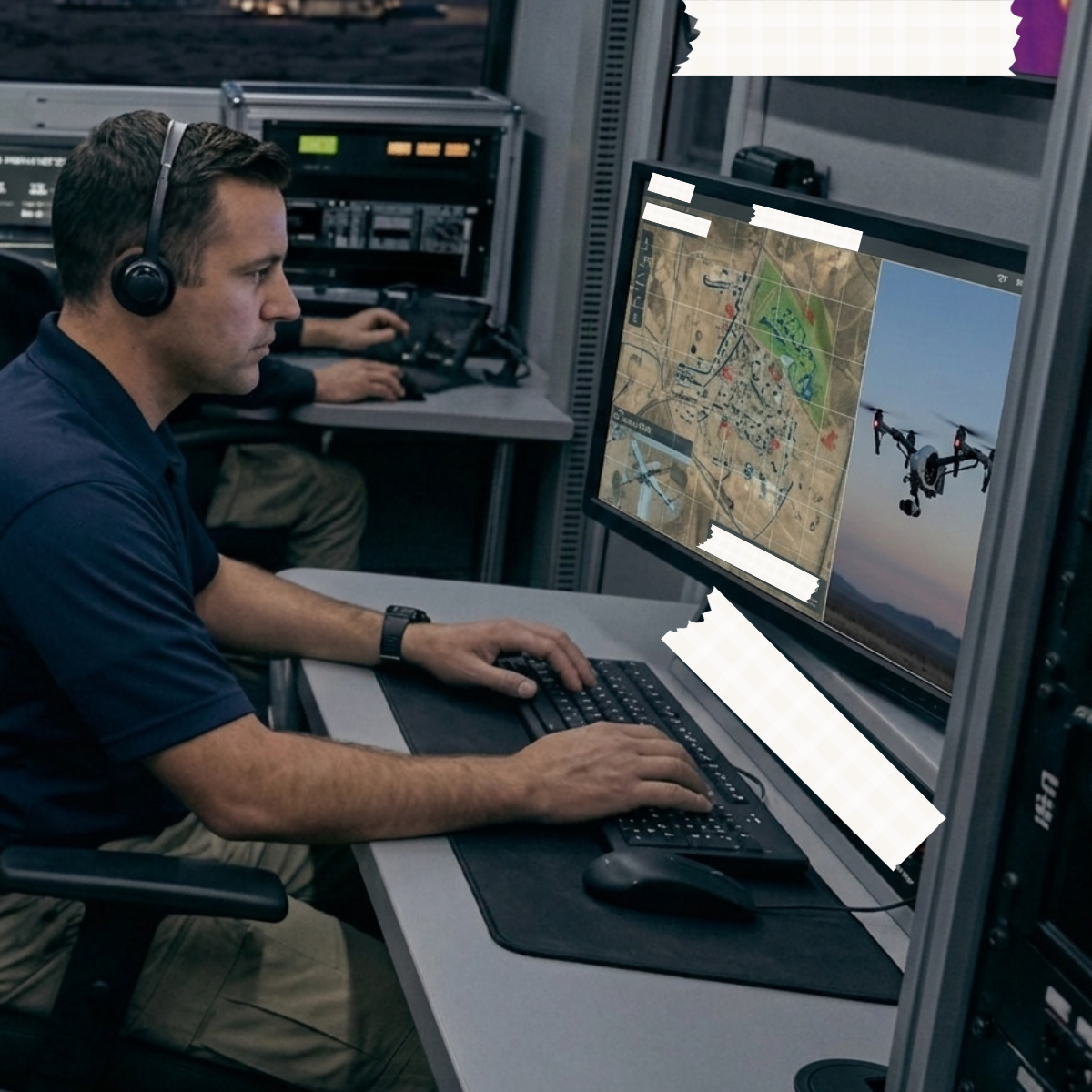
However, data alone is not security. When our sensors detect an anomaly, we do not simply send a guard to investigate. We deploy drone technology. These unmanned aerial vehicles serve as our rapid response eyes in the sky. Within moments, they are over the target area, providing high definition visual verification of the threat. This allows our team to distinguish between an animal crossing the field and a genuine security breach, ensuring that we only deploy our tactical resources when absolutely necessary.
The Human Core: A Trained Quick Reaction Force
The final, and perhaps most critical, piece of the puzzle is our human core. We understood that the most advanced technology in the world is useless without a team that knows how to harness it. We redefined the training of our Quick Reaction Force to integrate seamlessly with these digital feeds. Our personnel are not just guards; they are tactical operators trained to process live sensor data and interpret drone feeds in the heat of the moment. They are trained to make split second decisions based on intelligence rather than intuition.
This combination of elite personnel and technological depth is what allows us to cover large, complex, remote sites and eliminate the coverage gaps that plague traditional security firms.
Securing the Future of Energy
Nearly two decades after our founding, this philosophy remains the cornerstone of Paramount Defense Group. Security is not about adding more people or building higher fences. It is about having better intelligence and the professional training to act on it with precision. By blending the cutting edge of surveillance technology with the discipline of a highly trained force, we are not just monitoring oil fields. We are securing the future of the energy sector.